MUNDI
Researching a hybrid advance request flow to reduce friction and operational load.

MVP
Product discovery
B2B
Overview
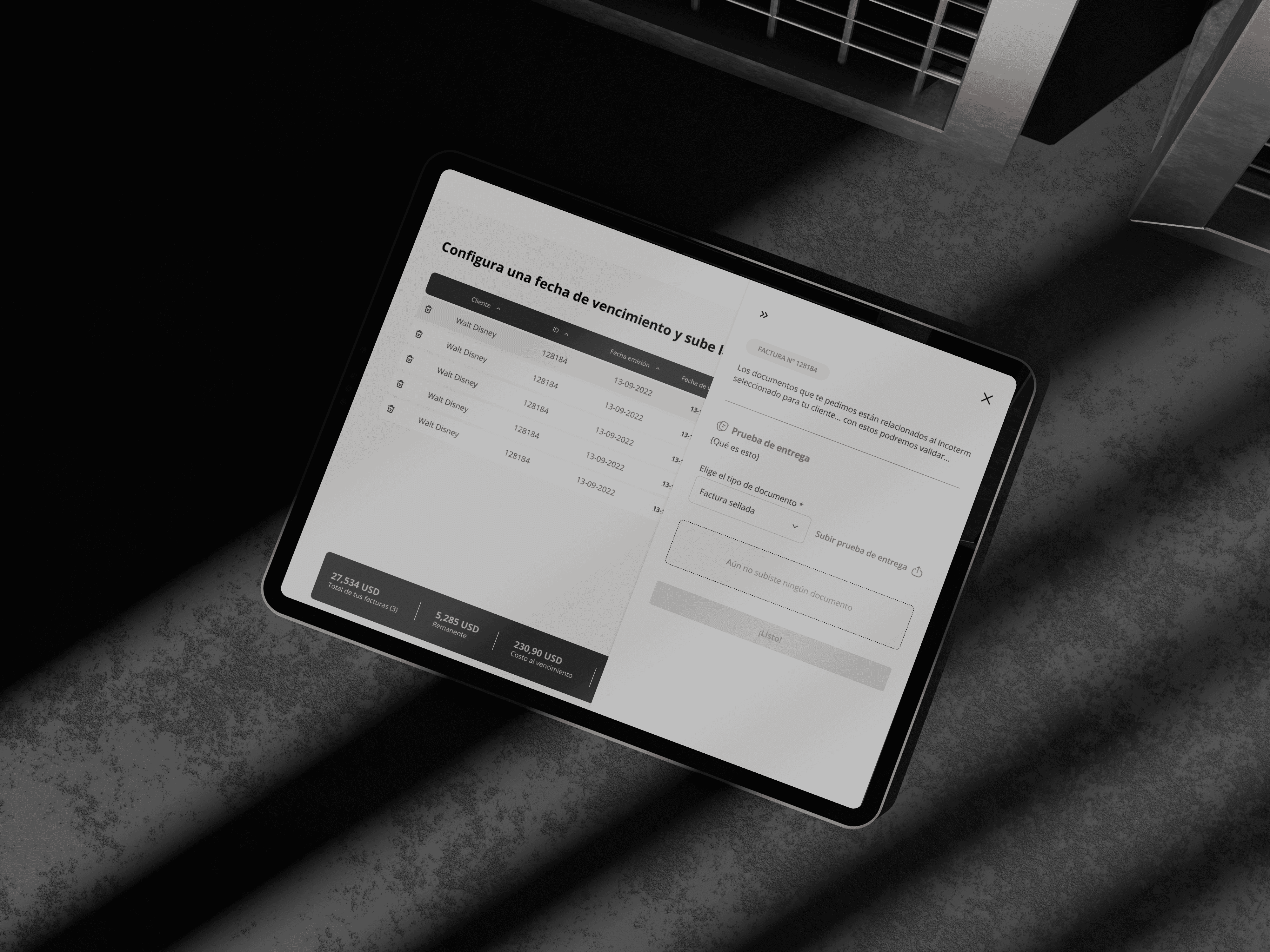
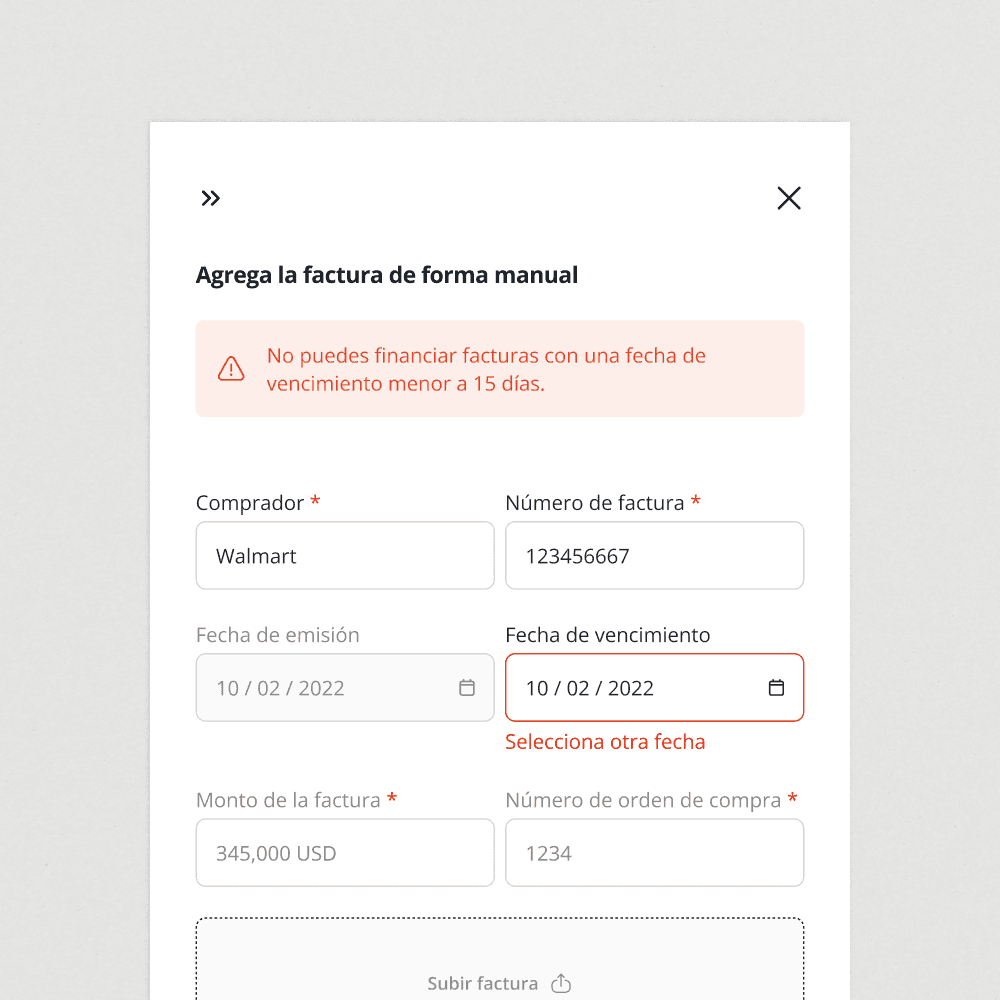
Mundi is a financial services platform offering capital access, currency exchange, risk mitigation, and factoring for SMEs across the US and Mexico. Users could request advances either manually or through a pre-filled SAT list, but this dual system led to a high volume of repeated requests and an increased workload for the customer service team.
Client
Mundi
Duration
8 weeks
Asigned role
Sr. Product Designer
Industry
Factoring
Year
2022/23

Goal
Simplify the advance request process for users and reduce the operational burden on customer service, with success measured through conversion time, daily request volume, and adoption of the SAT flow.
Process
The team combined product exploration, Mouseflow data, and stakeholder input to map friction points and UI inconsistencies. The data was telling: 48% of affected users submitted more than one request on the same day (often because a single request only covered one invoice), 19% of users relied on both the manual and SAT flows on the same day, and this pattern alone generated 78 additional requests.
Early in the process, a disagreement emerged between UX, which recommended addressing technical debt with smaller interface adjustments first, and the product team, who pushed for a full rebuild. I worked to balance user experience priorities with the development effort and constraints involved in a ground-up rebuild.
Solution
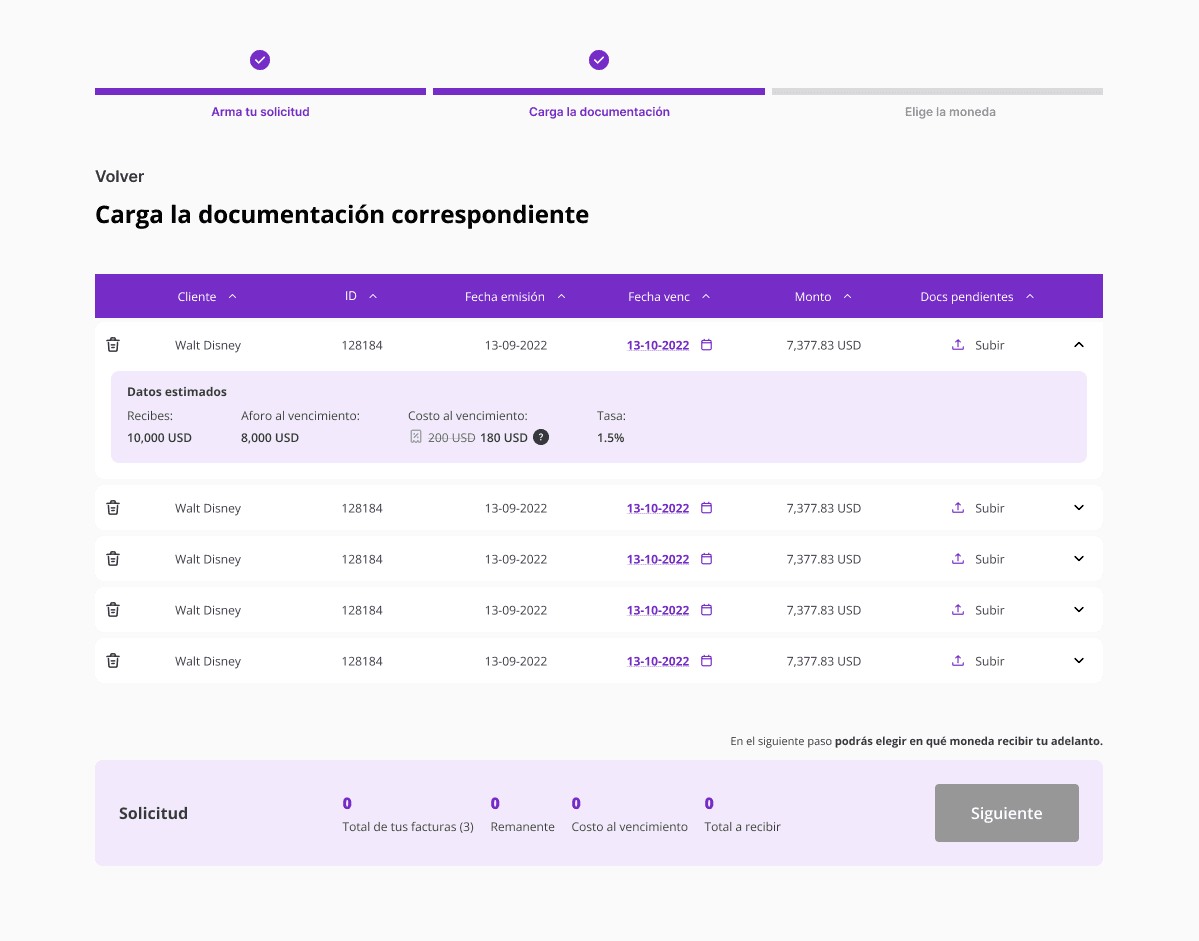
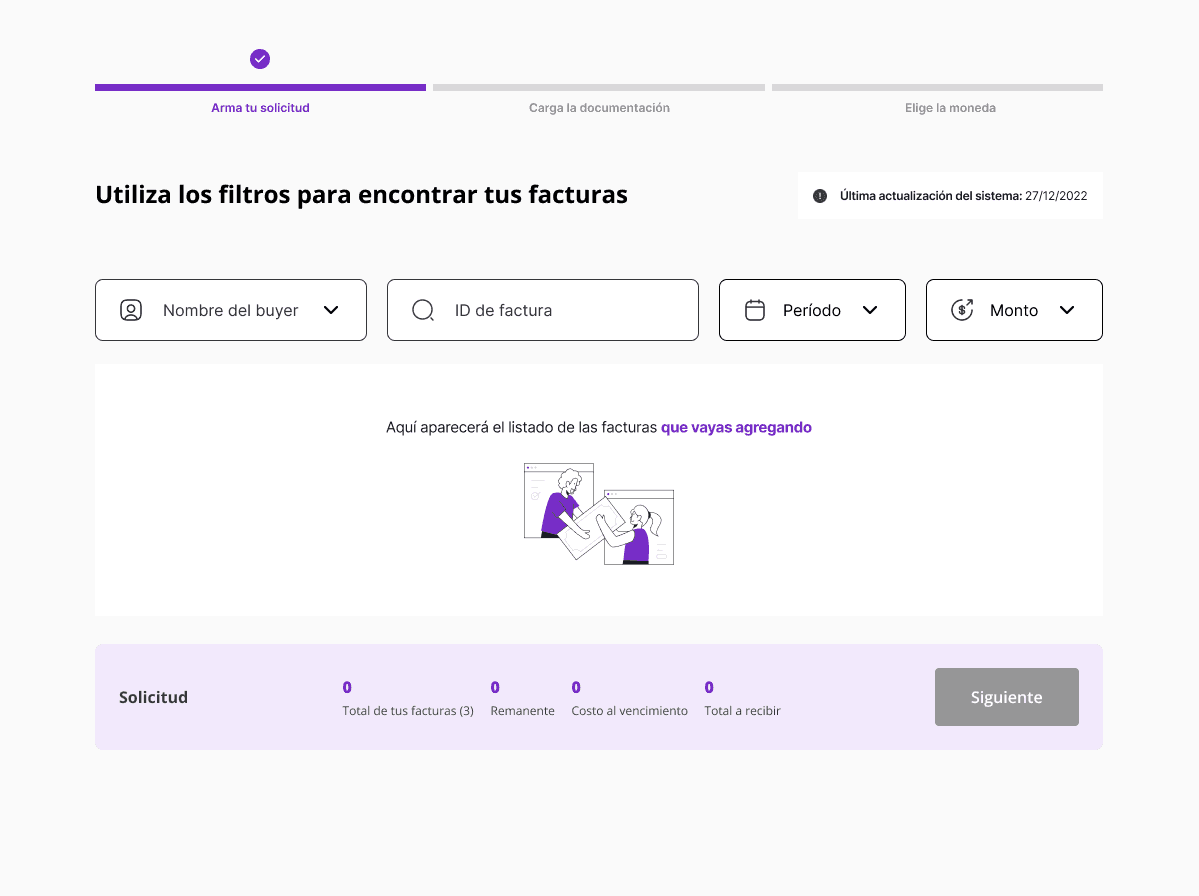
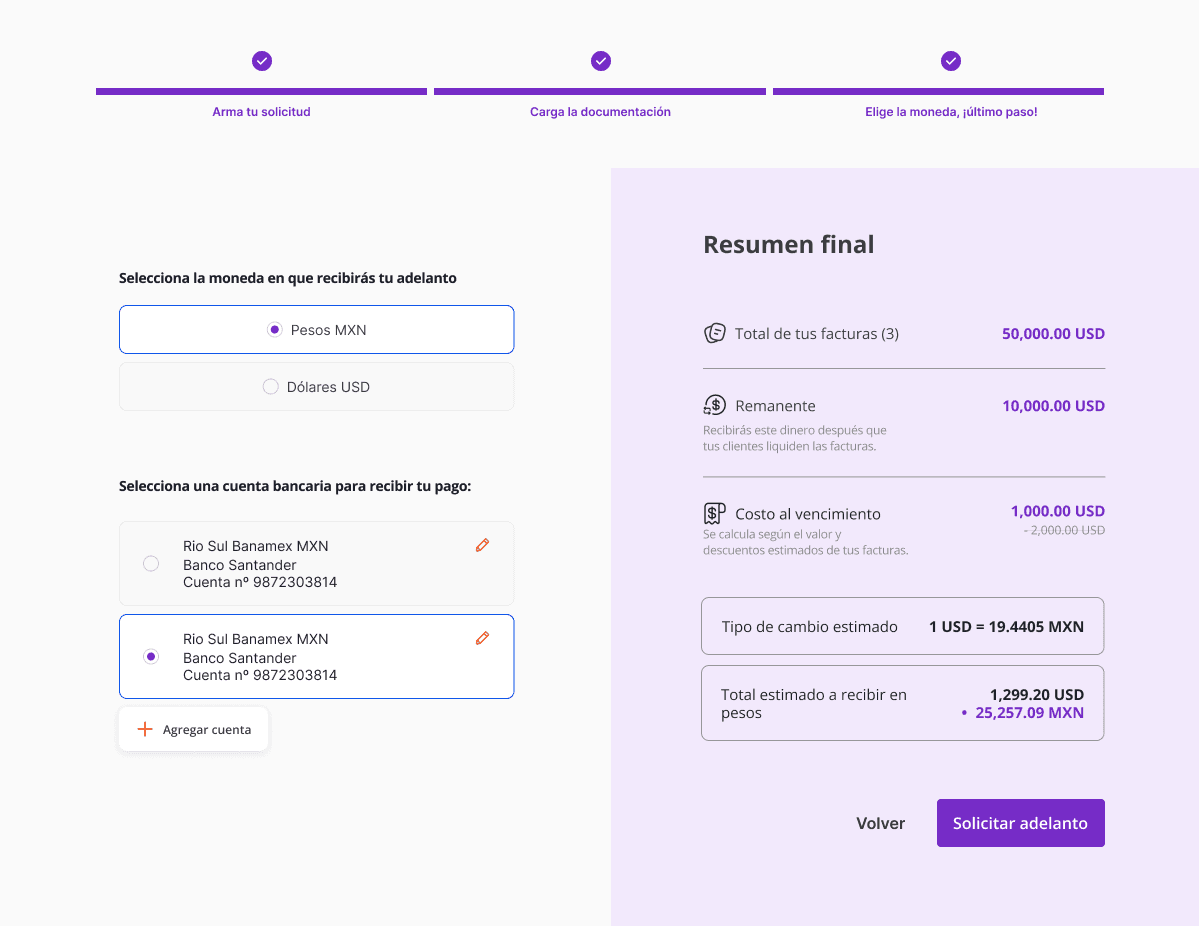
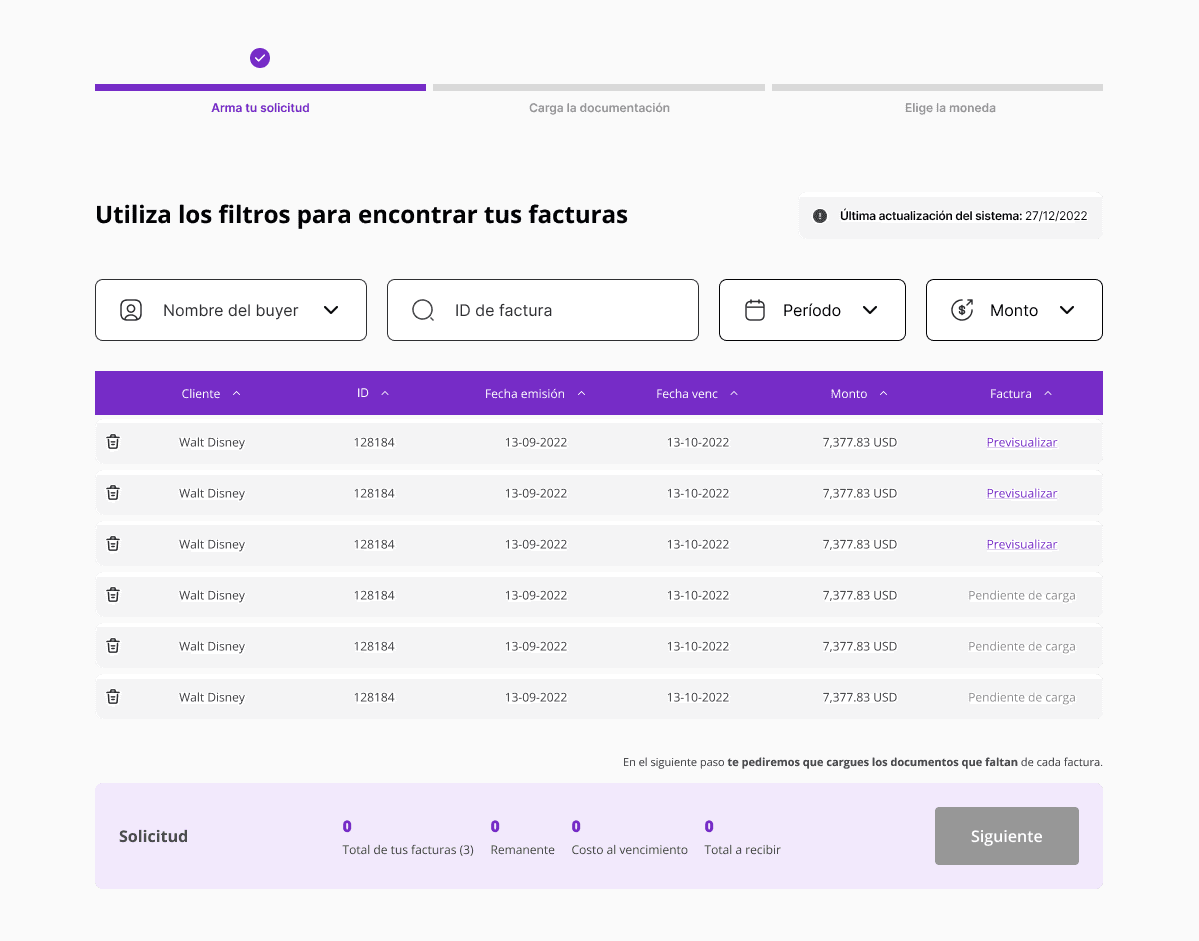
The proposed design centered on a unified search feature, allowing users to look up invoices directly from the SAT database or upload them manually if not found — replacing the need to choose between two separate flows from the start.


The proposal was approved by the product team as the long-term direction once the underlying technical debt was resolved, though UX flagged open concerns about the visibility of SAT invoices and the discoverability of the new search-based actions.


Impact
The project was discontinued when the business unit was closed, so the proposed flow was never implemented. Even so, the research phase surfaced concrete, reusable findings — the main friction points, UI inconsistencies, and the frequency of key user problems — that remain valuable for similar initiatives. The process also reinforced an approach of proposing multiple product versions to validate assumptions before committing to a full rebuild, balancing user needs against backend constraints.
Reflection
This was a project I didn't get to see through to the end, but I chose to include it because not every effort makes it to the finish line — and this one still taught me a lot. Working through the tension between product's vision, development's focus on feasibility, and our team's user research was a genuinely formative experience, and I'm grateful for the collaboration with my content partner along the way.